• Skip to primary navigation
  • Skip to main content
  • Skip to primary sidebar
  • Skip to footer

Roaming on Rubber

Unplanned and Unstoppable

  • Home
  • Converting Your Bus
    • Start Here
    • Toyota Coaster Bus Conversion
    • Bus Conversion Guides
    • Helpful Conversion Guides
  • Blog
  • Our Videos
    • All Videos
    • Mercedes Vario Conversion Series
    • Toyota Coaster Conversion Series
    • Roaming On Rubber Travel Series
  • What’s In The Bus
    • Our Toyota Coaster
    • Electrical Diagram
    • Plumbing Diagram
    • Product Reviews
  • Travel Tips
  • About Us
  • Contact Us

toyota coaster conversion

Toyota Coaster Motorhome Conversion – Floor Installation and Wheelchair Lift Dismantle

March 8, 2018 by Shane Patmore 3 Comments

There are some days that are just disappointing and our last day on our Toyota Coaster had us walking away with a frown. Not today, today would be great. We just knew it. Our goal was to dismantle our wheelchair lift and replace our damaged sub-floor.

The wheelchair access in our Toyota Coaster was at the rear of our bus, and opens like a ”clam shell’. It is not a standard lift however, and when discussing with people who install the wheel chair ramps, they stated it looked like it actually came off a Ford van or similar, and was made to fit the Coaster. 

As it was made to fit, it has been completely welded to the chassis. Of course we would pick one with something non-standard and difficult to remove. Either way, we decided to still give it a go, and remove what we could. 

Dismantling the wheelchair lift – 

Shane and Claire trying to dismantle and remove the wheelchair ramp in our Toyota Coaster bus conversion.

The easiest place to start was the hand rail, and fold out ramp. These were held in place by a few bolts and were easily removed. 

This now just left the main lift. There was a steel plate on the main lift area, and underneath it ran all of the electrics. The electrics looked like they were connecting each bit of the lift, and needed to be disconnected for us to be able to remove the pieces. So it made sense that we had to start by removing the steel plate.

A lot of the small screws in the steel plate were threaded so it took a fair amount of effort and frustration to try and undo them. Two of the screws were unable to be taken out and a grinder was required to cut the heads off. 

After all of the screws were removed, we were able to remove the steel plate. This allowed us to access the electrics underneath. 

Shane trying to use the grinder to dismantle and remove the wheelchair ramp in our Toyota Coaster bus conversion.

We were right. The wires ran under the metal plate and linked everything together. 

After reviewing the wires (and much to my disagreement!) Shane decided to cut the wires leading to the first piece of wheelchair lift he detached.

‘Check it’ he says. Of course I was not surprised to find it no longer worked. Shane had broken the electrical circuit and now we were stuck with the wheelchair lift down. This became priority number one now as without the electrics, there was no manual way that we were aware of to be able to close it again.

To fix this, Shane got some female insulated electrical blade terminals and a switch. He stripped the wires back, crimped the terminals on and connected them to the switch. 

For anyone out there like me who doesn’t understand that, he basically fixed the broken circuit by adding a new end and reattaching it to where he had cut it off from before. Kind of like cutting a circle, taking part of it away, and reattaching the ends to make a smaller circle.

So now the pieces of the lift had all been disconnected, and the electrical circuit was fixed, we were only left with the ‘clam shell’ doors. 

Replacing the Sub-Floor – 

If you haven’t read the previous post to this one, Shane and I had some damaged sub-floor at the rear of our Toyota Coaster motorhome. Water had leaked in via some damaged seals, and the back 30cm needed replacing. 

If you want to see how we removed the damaged sub-floor, you can read about it here. 

It was now time to replace the floor with some new wood. 

The original sub-floor we removed was 15mm thick. We wanted to replace this with marine plywood in case there were any future leaks. Unfortunately, we were unable to find 15mm marine ply to replace it. We decided to buy 6mm and 9mm marine ply which we would glue together to make the 15mm.

Photo of the new marine plywood cut and ready to be installed in our water damaged floor in our Toyota Coaster bus conversion.

So how did we do it?

  • Start by measuring the wood, and mark it up with a dark sharpie (or similar). 
  • Use some clamps, and secure the wood to a solid and stable spot ready for cutting. 
  • Use a jigsaw to cut along your marked lines. 
  • Make sure the wood fits into position, and adjust and cut as necessary. 
  • Once the wood is ready, remove it from position and spray the metal floor of the bus with some sort of Rustguard and allow to dry. 
  • Apply a layer of liquid nails to the metal of the floor, ready for the new wood to sit on top. 
  • Lay down the first layer of wood, and then apply more liquid nails in between the layers, and place the second layer of wood into position. 
  • Place something heavy on top, and allow to sit until set. 

Shane replacing the floor in our Toyota Coaster bus which was water damaged.

The sun was setting and it was time to reflect on the day we had had. The day started well. Then after multiple trips to the shops and the issues with the electrics we were feeling quite certain it was going to be another day of disappointment.

But it wasn’t!

We fixed the wheelchair lift and removed what we could. We cut all the wood, and replaced the sub-floor. It was a day of teamwork with our wheelchair lift and sub-floor, and we got there.

It all went well, except our sunburn… that was another story!

Filed Under: Conversion How-To, Toyota Coaster Bus Conversion Tagged With: bus conversion, bus floor, bus wheelchair lift, motorhome conversion, rv conversion, school bus conversion, toyota coaster conversion, toyota coaster home, toyota coaster motorhome, wheelchair lift dismantle

Toyota Coaster Motorhome Conversion – Bus Heater Plugging, Sub-Floor Removal and More!

February 14, 2018 by Claire Edwards Leave a Comment

So you have decided to do your own bus conversion, and you’ve gotten to the point where you are needing to do all those small miscellaneous jobs. It’s the things no one ever talks about and you should just ‘know’. But really, it never is that simple. And that’s what this post is for us; the small jobs we had to work out on our own for our Toyota Coaster, and now we can share them with you.  

Heater Plugging – 

Time to plug the heaters that we removed in the middle of the floor in our bus. If you haven’t already read it and need to, you can check out our post here where explain how to remove these heaters.  

Since we removed them, we have had a few people ask us how we went about plugging the heaters in our Toyota Coaster Motorhome Conversion. Well we can tell you it was a success. 

School bus conversion - heater plugging - Toyota Coaster conversion
  • Shane started by hopping underneath the bus and traced the heater hoses back towards the engine bay until he found where they clamped onto some metal pipes. 
  • Then, he cut the hoses approximately 10cm from this join and, using a bucket, let the coolant drain out until empty. 
  •  After this, he then plugged them with 19mm rubber plugs (purchased from Bunnings) and sealed the ends with hose clamps. 
School bus conversion - Heater Plugging - Toyota Coaster conversion

We have not had any issues with overheating or coolant leaks, so can confirm for us the heater plugging was a success.  

Sub-Floor Removal –    

Claire measuring the damaged sub floor - Toyota Coaster converison

If your sub-floor has any damage, it may be a good idea to replace it now during the conversion, rather than needing to deal with it later.  

Our standard Toyota Coaster sub floor was in quite good condition. However the rear 30cm or so had water damage from a leaking seal. So Shane and I both decided the most cost effective method would be to replace just the back 30cm with water damage. 

  • Start by removing any seals, and measuring the back portion you want to cut out. For us, this was 30cm across the rear.  
  • Remove anything that may prevent you from cutting the floor up.  

We had some wheelchair seating mounts which needed removing.  These are the mounts that were used to hold the seats in at the back of the bus; the seats that were removable to put a wheelchair in if necessary. These were a little tricky to remove; I used an allen key on top of the mount to hold it in place, while Shane unbolted a nut underneath the bus. WD40 was our best friend here. We used a lot of it to loosen the nuts and remove the 4 bolts off each mount. If we were not replacing our sub-floor, we would not have bothered to remove these mounts as they will be located under what will be our bed. However, we decided that considering we were replacing the subfloor, it would be easier to remove these now. Other we would need to cut and shape the new floor around them.  

  • It is time now to measure the depth of the wood. We measured our sub floor depth by taking multiple measurements at different levels and established it was around 15mm thick. Due to the water damage and age of the wood, one measurement could not be relied upon accurately.  
  • Now it was time to remove the wood. We set the circular saw to a depth of around 12mm. Close enough we should be able to pry the wood off; not too deep as to touch the metal of the bus underneath. We cut as much as we could with the circular saw, and used a crowbar, chisel, and anything else we could to scrape the remainder of the wood off.  

So this was our experience of removing our sub-floor. If you want to continue reading about our new sub-floor installation, check out our next post here.  

Shane replacing the damaged sub-floor - Toyota Coaster conversion

Seal Replacement – 

Claire - Toyota coaster conversion

Now that the damaged sub-floor was removed, we had to fix the leaking seals prior to laying the new floor.  

This part was easy; at the back of our bus we have a wheelchair access door. The seals were old, dry and cracked. It’s important to fix the issue otherwise you will continue to have problems later. 

We were able to purchase auto seals from our local hardware store. We purchased Goliath rubber seals. It was a simple task to cut the old cracked seal and push the new seal on in its place, ensuring a snug fit.  

Sub-floor Hole Sealing and Filling –   

Our Toyota Coaster motorhome sub-floor had a few holes – this was expected after the seat, heater, hand railings, and trim removal! 

Shane and Claire sealing the sub-floor - Toyota Coaster conversion

In NSW, it is a requirement that a vehicle not have any holes. So be able to get signed off by the engineer, we had to fill any visible holes. Not only this, but we want it to be completely waterproof.  

As this was a bus we are converting to a home, we decided to use a sealant suitable for wet areas (just in case there are ever any leaks!).  

After research, we decided on Selleys 100% Wet Area Silicone Sealant in white. Even though the sealant won’t be seen underneath the floor, we chose white in case we decided to use it for our bathroom.  

  • For the larger holes (particularly the ones from the heater plugs we removed earlier), we purchased a thin sheet of aluminium and tin snips, and cut some small rectangle pieces. 
  • Once these pieces of aluminium were ready, we placed a layer of silicone around each hole, and used it to adhere the aluminium in place.  
  • We also used the silicone to seal around the edges of all the subfloor, and joins in between.  
Claire using tin snips and filling holes in our Toyota Coaster conversion

So these are just a few of those jobs that no one ever talks about. Glad we can finally say they are done!  

Make sure you subscribe to hear more about our Toyota Coaster conversion, or watch us in action below ?  


Filed Under: Conversion How-To, Toyota Coaster Bus Conversion Tagged With: bus conversion, bus seal, bus seal replacement, coaster flooe, coaster heater, coaster heater plugging, school bus conversion, toyota coaster conversion, toyota coaster heater, toyota coaster heater plugging, toyota coaster heater removal, toyota coaster home, toyota coaster motorhome

Toyota Coaster Motorhome Conversion – Heater, Floor, Roof and Wall Removal

February 1, 2018 by Claire Edwards 12 Comments

Day two of renovations on our Toyota Coaster motorhome conversion – we were excited! Our first day of removing the seats had been so successful that were keen to do more. The goal for today; remove the heaters, vinyl floor, and the internal roof and walls. In other words… IT’S DEMO DAY! 

The only concerns we had for demo day, was the removal of the heaters. There is not a lot of information online regarding this and we were a little concerned about the process. 

I had even tried that morning to call around our local auto stores to try and pick up a Toyota Coaster manual… who knew this would be so hard! All we wanted was a guide to work out which hoses to cut for them. We rang multiple places and looked online and have come to the realisation that they no longer publish them. There is only a CD or an online, downloadable version. 

So we decided we were going to wing it. We will eventually get the online version, and possibly even look to print it as a hard copy. It will just be convenient if something were to go wrong. If interested, you can look here for the CD.

The Heaters –

Shane pointing out the heaters inside our Toyota Coaster bus prior to removing.

There are two heaters located in the middle of the bus floor. For anyone wanting to install anything like a kitchen, bathroom, or even just a lounge room, there placement is quite inconvenient. You could look at building over them, or making a box to sit on top, but if they are not required, it is much more space friendly to remove them. So that’s what we decided to do. 

They would have to be the most difficult thing we were to remove today in our Toyota Coaster Motorhome.

The Process –  

  • The heater is bolted into the floor, with the nuts of the bolts located underneath the bus. The location underneath the bus can be quite difficult to find on your own. Try and have someone on the inside of the bus, tapping the floor at the location of the bolts, while a second person searches underneath. 
  • Once the bolts are located, there are 3 to remove. These can be done relatively easy with a wrench, or socket. One of our heaters was covered in built up dust and grime. If this is an issue, maybe spray with WD-40 and leave for 10 mins to help clean the area a little before trying again. 
  • When the bolts are loose, it is time to disconnect the two hoses. These are removed by undoing to clamps on the hoses and pulling them off. 

Be careful when removing these hoses as the coolant inside will come spurting out. Shane got a nice little splash to the face and this is something you do not want to get in your eyes, mouth etc. Have a bucket ready to go to catch any excess coolant. 

Now that the hoses are disconnected and the bolts are undone, the heater just lifts out. The removal of our heater in our Toyota Coaster bus was complete!

The next step for the heaters is to plug them. Have a read of our next post here where we guide you through how we plugged ours. 

Shane pointing out the heater hoses underneath the bus before removing in our Toyota Coaster bus conversion.

The Walls –

The walls in the Toyota Coaster are held on with metal screws on the padded edges, and trim fasteners on the walls. 

I started the hard way with the trim fasteners – trying to remove one by one. This was not a fun endeavor. After getting fairly frustrated I decided to use the drill with a phillips head driver on it to remove the screws holding the padded edges of the wall panels in place. The screws were mostly located tucked up underneath the padded edges, but were easily accessible.

Claire pointing out the screws underneath the wall panelling prior to removing in our Toyota Coaster bus conversion.

Once the screws were removed, I was then able to just pop the walls off. The easiest way is to get behind them and pull. It takes a little effort but is much simpler than trying to remove each trim fastener individually. Now that I had the knack, it only took around twenty minutes to remove all the internal walls.

The Roof Lining –

Removing the internal roof lining of our Toyota Coaster motorhome was next. 

This is not something you have to remove. If you have decided to keep the current roof, it does have a layer of insulation underneath as well as structural metal beams. These beams can be drilled into for support.

Our roof was in fairly good condition and we did consider leaving it as is. However, part of our dream included a wooden roof. So we decided to remove the roof lining to make way for our new roof paneling and to install new insulation.

After doing some research online about the insulation currently in the Toyota Coaster, we realised it is fairly combustible. We saw a video showing the difference between the current insulation and new insulation when catching on fire. It was not pretty! Being that this was going to be our home, that was a good enough reason for us to want to replace it, in the off chance anything were to ever happen.

The removal of the roof lining was fairly simple. Using a phillips head piece on the drill we removed all of the lights and speakers in the roof. Once these were removed, the roof just peeled out.

We didn’t get a chance to remove the insulation and will be leaving this for another day. If you want to read about how we removed the insulation, check out that post here. 

The Air Conditioner Ducts –

The air conditioner ducts are only something you will have in your Toyota Coaster if you have the deluxe model which features ducted air conditioning. To us, this was something that was wasted space. It is an empty duct that is used to navigate the air from the front to the back of the bus. They are very large, and empty underneath. 

The plan in our Toyota Coaster motorhome is to have overhead cupboards all the way around the edge and this is the perfect place to put them. 

We also decided on a roof mounted split system air conditioner, so we did not require ducting from the front.

Shane and Claire removing the air conditioning ducts in our Toyota Coaster bus conversion.

These were frustrating to remove. As with almost every other thing we had done so far, they required a phillips head drill piece to remove. 

Underneath the ducts, there are two rows of screws along the entire side of the bus. The screws were not drilled into any backing, so when trying to remove, they just spin in place. 

We did this together as a team.

As one of us would remove a screw, the other would pull on the plastic panel making sure the screw dug into something and would pull out.

It doesn’t sound too complicated, but when you have one every 10cm and you are constantly reaching up high it becomes quite difficult and time consuming!

The Floor –

Ahh… The removal of our vinyl floor, the last step.

After removing all of the edge trims, door mechanism and hand rails, it was a simple task of peeling the vinyl off. It works best if you get down low and peel together. The glue Toyota have used in construction is amazing and extremely adhesive. If we had thought about it earlier we might have had something ready to go to start cleaning it while we removed. But alas, we did not.

I recommend not removing this until you are ready to clean or to lay something over the top. Ours now has not a only a layer of glue to remove, but also looks like a lawn from the grass we had dragged in.

We found the best/easiest way to remove the glue is to use a planer and plane the top edge of the wood off. We tried multiple different cleaning chemicals however did not have any success and spent hours on the floor. If you do decide to use a planer, make sure you regularly clean it as the glue can clog it and if not careful, it could damage your planer. We did this for one of the sub-floor panels and decided that it still wasn’t worth the time it took. Eventually, we ended up just painting over the adhesive with a primer. 

At the end of DEMO DAY, we were exhausted and proud.

We allowed ourselves two days to remove the heaters, vinyl floor, internal walls and roof. We did an amazing job and got it done in one! I guess ‘winging’ it paid off. Next time we will work our how to plug our heaters, as well as looking into replacing our damaged sub-floor in our Toyota Coaster motorhome.

Everytime we set our minds to it, we exceed all of our expectations and we couldn’t be happier. We are  waiting for the day for something to go wrong, or not as planned because we know it will. I guess that’s one way to look at it, you can only plan so much. But until you actually get in and get things started,  you’ll never get anywhere. 

Check out our DEMO DAY video here – 

Filed Under: Conversion How-To, Toyota Coaster Bus Conversion Tagged With: bus heater, bus heater removal, motorhome conversion, rv conversion, toyota coaster conversion, toyota coaster floor, toyota coaster heater, toyota coaster heater plugging, toyota coaster heater removal, toyota coaster home, toyota coaster motorhome, toyota coaster roof, toyota coaster wall

Toyota Coaster Motorhome Floor Plan – Designing Your Home

January 23, 2018 by Claire Edwards 4 Comments

One of the first steps to converting a Toyota Coaster to a motorhome is coming up with a floor plan.

Designing the floor plan for your motorhome can be tough but getting it right will save you time and effort during the building stages.

First, you need to decide what you want out of your conversion.

What will make it feel like home? What do you need to survive?

Will you need the essentials to survive off grid, or will you be somewhere with amenities most nights that you don’t need to worry? We have had many discussions about this… or should I say arguments? Our Toyota Coaster motorhome plan is something we have been thinking about non-stop since purchasing our new bus.

Shane and I both want the finer things in life, normally reserved for a large house, squeezed into our beautiful bus to be taken on the road. This was a tough one for us. We had to think about what was really important; what was a necessity, rather than a want. We needed to work on minimalising our current life to fit everything we own in a 10 metre squared living area.

Our wants

Shane’s wants was his home theatre room. For me, it was a dressing table. How do you go about fitting a home theatre room and a dressing table in a Toyota Coaster motorhome?

Short answer, you can’t. There has to be compromises.

We have had to design the bus so we still had a large enough lounge to rug up on and watch a good movie or two, with a reasonable size TV and soundbar. Despite Shane’s best efforts, a 43inch TV would not fit.

For the dressing table, a large mirror on the closet, and some internal storage space was the best compromise to make sure we were getting what we wanted.

I guess this is all what it comes down to; deciding on what you need to make you happy and comfortable and what is something you can compromise on.

Our needs

And then of course there are the necessities. The things we need to live, to survive.

We have all the standard plans for a nice fridge, oven, stove, washing machine and toilet. We know we will require a lot of storage in our Toyota Coaster motorhome and have worked out how we will achieve this with what space we have; under bed and lounge storage, above head cupboards and built ins where possible.

There will be gas bottles and solar, a hot water system, water tanks and batteries, all the requirements to live off the grid and spend most of our time free camping.

It may sound a bit cliché, but the best place to start is to write a list. Ours looks a little like this –

NeedsWants
Off grid system
Enough solar, and water storage capacity to survive for minimum 4 days or so if necessary
Large, comfortable lounge
Shower and toilet“Home theatre” area
Kitchen – sink, fridge, oven, microwave etcBlender, slow cooker
Proper mattressFull length mirror + Dressing space
Gas bottles X 2Washing Machine
Storage To look like a “home”

Next step is to work out a layout. This is where you need to know your dimensions, so you can accurately draw up your space.

For our Toyota Coaster the dimensions are –

Length – 5.3 metres –  (This is the living area length from behind the cabin seats)

Floor Width – 1.87 metres

Height in the centre – 1.83 metres

Width at the middle (Widest point) – 1.98 metres

Then you need to decide if you are going to build it completely custom yourself, or use companies such as Noq Noq RV fit outs, or DIY RV Solutions to help you with your build. There are a lot of flat pack options, even from hardware shops such as Bunnings or Ikea that can be integrated into a build.

Putting it all together – Creating a Toyota Coaster floor plan

This is how the floor plan looked for our Toyota Coaster.

Photo of drawn up plan for our Toyota Coaster bus conversion.

Once these decisions are made, it is time to take everything from your list, and make it work in your floor plan.

We opted to go completely custom, and build everything ourselves. The only thing we decided against doing ourselves, was a bathroom cubicle which was purchased from Custom Coaster Conversions. As this is a wet area, we didn’t want to struggle with water leaks so went with an all in one design.

Research here is key.

Websites like Pinterest have been invaluable when it comes to planning and designing our bus. There is loads of inspiration and it gave us so many ideas we may never have thought of. A gas lift bed with storage underneath, a couch that slides out to a sofa bed, and a slide out extension to our kitchen bench. We created a board, https://www.pinterest.com.au/roamingonrubber/ideas-for-our-bus-conversion/, to save and keep these ideas for inspiration. Other sources of inspiration were blogs like this one, Instagram and Facebook groups of like-minded people.

Downloading and reading the installation manuals for appliances will also help make sure you plan correctly. For example, after reading our oven manual we had to move it away from the fridge as it could not be next to any other appliances.

What we have learnt

We didn’t specify on our layout where we would install things like our gas bottles, electrical system, hot water heater etc. This was a rather large mistake as we constantly had to make changes on the fly when we would learn new information.

It also meant we didn’t cut holes in the bus prior to walls being installed, making the job harder.

A good idea is to plan for these things first, that way you can cut holes early. It also allows you to run wiring and pipes in the wall cavities. Something we also were not planned for.

Weight distribution is something that must be considered. We thought about weight between the passenger and drivers sides. But didn’t think enough about weight behind the rear wheels. This has caused the back of our bus to be lower to the ground then usual.

We thought going completely custom was going to be the best option for us. However, there were a few issues.

We couldn’t get the nice finishes on our cupboards that we wanted, so ended up going to a cabinet maker to make them for us. This ended up being fairly expensive.

Our kitchen area was designed to look sleek with cupboards. As these cupboards were all custom built, they were not built to standard sizes. This meant any slide out drawer or tray did not fit, or at least did not fit correctly; especially cutlery inserts.

If we were to do it again, we would probably plan for and buy a flat pack kitchen and reinforce it.

Time. Time is huge. Whilst we thought doing things custom would look better and save us money, we didn’t quite realise how much additional time it would take us; all the extra research and finding things that would work, and then physically having to make everything. This can be a major impact if you are on a time limit.

So whilst planning your layout is definitely a must for your bus conversion, it is also good to know how different things can impact you and your build.

Knowing what you need to have and how much space you have is a must. Then deciding on how you want to achieve your results, and what timeframe you need to do it in are important steps.

So many things took so much longer than we expected, but having a good solid floor plan is the best way to ensure you reach your goals, and get what you want.

Filed Under: Conversion How-To, Toyota Coaster Bus Conversion Tagged With: build a rv, coaster bus conversion, how to build a motorhome, motorhome floor plan, rv floor plan, school bus conversion, school bus floor plan, school bus plan, toyota coaster conversion, toyota coaster floor plan, toyota coaster home, toyota coaster motorhome, toyota coaster plan

Toyota Coaster Motorhome Conversion – Seat Removal

January 18, 2018 by Claire Edwards 2 Comments

Once you have chosen your vehicle for your motor home conversion, the first step for most people is to remove the seats and empty the bus. We were lucky that our Toyota Coaster seats were not too difficult to remove. However, we still wanted to provide some handy information for anyone needing some help. Unlucky for us, the day we decided to start our Toyota Coaster seat removal, was going to be over 45 degrees!

What are the rules with seats in a bus conversion? 

Something that can differ between each state in Australia, and definitely something to check before removing the seats; is the amounts of seats, with seat belts required per sleeping berth.

So for example. Shane and I will have a double bed, and our Toyota Coaster bus plan will be made to sleep just 2. This means we are able to remove all but 2 seats. If we were to have enough bedding to sleep 4, we would need to have enough seating with seat belts to match. You cannot have less seats than sleeping berths.

You may be able to move seats by using the current anchorage points.  Possibly even change the position of the seats, build your own, or have additional seat belts added. Either way, it is best to chat to an engineer in your state first to make sure what you are doing will be legal and able to be registered as a motor home once complete. It would be so sad to go to all that effort to not be able to register it!

If you are looking for more information for NSW standards to convert a vehicle to a motorhome, have a read of this RMS link. We have constantly referred back to this link while we have been building our home.

Photo of all the seats that have been removed from our Toyota Coaster bus conversion. Toyota Coaster seat removal.

What tools do you need? 

In our Toyota Coaster bus, we had 5 sets of double seats to remove, 4 single seats, 2 single wheelchair removable seats, and 2 double sets of wheel chair seats.

We started with the standard double seats and the single seats. It was very simple. For most seats, there were 2 bolts in the floor, and 2 bolts in the wall. Each used a 13mm socket to be removed. It only took around an hour in total to remove these seats.

Our Toyota Coaster bus has a wheelchair access and lift at the back of the bus. So the back 2 rows of seats were made to remove easily. We found this out way too late. I won’t tell you how we did it, and will give you the right information instead!

Underneath each seat, there is a lever. Once this is pushed, it undoes the latches which hold the seats in place. This then allows the seats to be removed, and just leaves the mount on the ground.

These mounts of our Toyota Coaster seats are the difficult part to remove.

Each one is bolted with 4 allen key bolts into the ground, and requires a nut to be undone underneath the bus. The easiest way was to start with WD40 to provide some lubrication to the bolts and the nuts underneath. After this, an allen key was held on to the bolts on top, whilst the nut was loosened underneath the bus just enough so we could remove the bolts from the top.

It was not easy. However, we were lucky. Most of these are in the place where our bed is going to located, so we did not need to remove the majority.

For a lot of people, removing the seats can take a long time and be extremely frustrating. From our research, a lot of people need to individually grind out each seat from in the bus, but also underneath.

Considering how long we thought it would take, it wasn’t as bad as expected and the seats were removed. Our next step is to remove the roof, walls and floor in our Toyota Coaster school bus.

Check out all our mistakes from our first day of our bus renovation below –

Now read on to see the fun we got up to next with our school bus conversion heater, floor, roof and wall removal, and how we can help you!

*Literally the only tool required!

Filed Under: Conversion How-To, Toyota Coaster Bus Conversion Tagged With: bus conversion, coaster seat, motorhome conversion, rv conversion, school bus conversion, toyota coaster conversion, toyota coaster home, toyota coaster motorhome, toyota coaster seat

4 Reasons Why You Must Consider a Toyota Coaster For Your New Bus Conversion

January 13, 2018 by Claire Edwards 2 Comments

Are you looking to convert a school bus into a motorhome? Wanting to get escape the 9-5 daily grind and explore everything around you? Not sure what is the best vehicle for your bus conversion?

Yep, it’s a hard decision, but we’re here to tell you why you should consider a Toyota Coaster for your conversion.

We undertook a lot of research before deciding on a Toyota Coaster for our school bus conversion; our home. There are so many things to consider – like what sort of layout is it going to have? Am I going to be able to fit everything that I want and need? Am I going to be able to drive it? Is it reliable? The list goes on and on…

The good news is, you will get there; a decision will be made. After all our research it became clear to us that the Toyota Coaster was everything we were after, and more. And, with helpful posts like this, it makes it that little bit easier to compare, and get information for your decision as well.

Shane and Claires Toyota Coaster chosen for their school bus conversion - best bus for conversion

Why choose a Toyota Coaster?

Reliability – 

Arguably the most important factor when considering a vehicle to be your new home is reliability. You don’t want to have it fail and leave you stranded. Where will you stay if it needs to be at the mechanics for weeks?

The Toyota Coaster is a popular minibus available locally in Australia, Japan and China, but imported all over the world. They have been driving on our roads for almost 40 years with over 20,000 of them being sold locally in Australia, and many more being imported.

Toyota Coaster’s (Primarily models between 1993 and 2003) have the same engine as the Toyota Landcruiser, the Toyota 1HZ. This well respected engine has been found to be extremely reliable, with some coasters lasting well over 600,000 kms.

The coaster is famous and well known worldwide, for its strong body and large seating capacity. The internal floor of the Toyota Coaster is made up of a durable and high-quality vinyl-covered timber. The coaster has been so popular that many companies have tried to replicate it, however none have been able to come up with a design that has been as durable.

There is a reason it has a reputation for a bus that won’t fail you!

Easy to service – 

Because Toyota in general is such a well-known brand Australia wide, almost any mechanic can perform services and minor repairs on a Toyota Coaster if required. Parts are easy to come by, with most local places stocking Toyota parts or being able to order them in, relatively easy and inexpensive. This is a huge reason why the Toyota Coasters are popular for a bus conversion.

Size – 

Due to being a minibus we found the Toyota Coaster to be the perfect size for what we were looking for. It is large enough that we could comfortably have a queen bed, shower/toilet, kitchen and lounge area with space to store everything we require. Yet, it is also small enough, at around 6.8m long and 2m wide, that it would not be a major inconvenience driving to and around national parks, a big win since this is one of the reasons we wanted to do this. It also fits into two car spaces, and is not much wider than a 4WD, which makes it easier to drive around town and park when required.

In Australia, it can be small and light enough to be driven under a standard car licence, which allows you to drive a vehicle up to 4.5 tonne and with a maximum of 12 seats.

The next licence up is an LR licence, or light rigid truck licence, which is designed for vehicles above 4.5 tonne and up to 8 tonnes, that carry more than 12 passengers.

The Toyota Coaster has a GVM of 4.99 tonne, this includes seats and 22 passengers. Once the seats are removed, the coaster will be reduced in weight enough to be reclassified to a class C, or car licence. If you keep the converted weight under 4.5 tonne gross, then you will not require a LR licence.

This was not something we did, however can be very handy.

To get an LR licence in NSW you must undertake a truck driving course and pass a computer test. This makes it a much more convenient and cost-effective method as the LR courses can be pricey.

Read more about driving a Toyota Coaster on a car licence.

Availability and Pricing - 

The cost of the Toyota Coaster itself is reasonable. After researching many different models that ranged from around AUD $10,000 to $25,000, we found that the coaster was a very viable option to transform into a motorhome.

We also learnt that once coasters were converted, hold their value extremely well. For the initial cost you get great benefits including excellent reliability and lifespan, a good amount of space for something that can only require a car licence (once converted), large windows, rear doors, and wheelchair lifts in some models.

Toyota Coaster buses are fairly easy to come across. They have been around for a long time, so you can imagine there are a fair few of them out there. We searched Australia wide and ended up finding one in our own suburb . It had everything we were after and more – what are the chances!

Not only is the bus itself readily available, but because it is such a popular choice for a motorhome conversion, so are the parts to do it. Companies such as DIY RV Solutions and Noq Noq RV fitouts provide flat pack options already cut and ready to fit into a Toyota Coaster. This can be helpful to look at if you are not sure where to start and to get some ideas.

Final thoughts

Shane and Claire standing in front of their Toyota Coaster - best bus for conversionEven after re-reading what we have just written, it solidifies that we have made the right decision in choosing a Toyota Coaster.
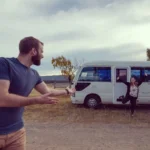

It feels like the best bus for our conversion. Our coaster feels like home already, and it has only just had the seats pulled out. And that’s how it should be, it should feel like home.

When we decided that this was going to be our adventure, and we told our family and friends, so many of them laughed. Who ups and leaves to live in a bus on the road?

Well we say to anyone looking to do this, or even just interested, if you can, go for it. Just do it. So far, the sense of freedom it has made us feel, and the sense that we are going to achieve what we want out of life, is so exhilarating.

We hope this post helped with your decision to convert a bus into a motorhome, and if you have any other questions, feel free to contact us ?

Filed Under: Conversion How-To, Toyota Coaster Bus Conversion Tagged With: bus floor plan, motorhome conversion, rv conversion, school bus conversion, school bus floor plan, toyota coaster conversion, toyota coaster home, toyota coaster motorhome, toyota coaster review, toyota coaster rv

« Previous Page
Next Page »

Primary Sidebar

Roaming on Rubber

Receive Tips and How-To on Converting a Toyota Coaster

Follow Us On Social Media

Visit Us On FacebookVisit Us On YoutubeVisit Us On InstagramVisit Us On TwitterCheck Our FeedVisit Us On Pinterest

Recent Posts

  • How to Find Free Campsites and More In Australia – A Guide to Wikicamps
  • Guide to Caravan and RV WiFi in Australia
  • Electrical System Guide For Your Van or Bus Conversion
  • Our New Bus Conversion and Tips On How To Get It Right The First Time
  • Things You Should Know Before Starting A Bus Conversion

Recent Comments

  • Justin Dauginas on Can You Drive A Toyota Coaster On A Car Licence
  • Brian on How to change a bus into a motorhome and register it in NSW
  • Maria on How to change a bus into a motorhome and register it in NSW
  • Hefem Kipungi on Toyota Coaster Motorhome Conversion – Seat Removal
  • Shane Patmore on How to Find Free Campsites and More In Australia – A Guide to Wikicamps

Archives

  • August 2022
  • July 2022
  • February 2021
  • January 2021
  • September 2020
  • August 2020
  • July 2020
  • May 2020
  • February 2020
  • January 2020
  • May 2019
  • April 2019
  • January 2019
  • November 2018
  • October 2018
  • August 2018
  • July 2018
  • June 2018
  • May 2018
  • April 2018
  • March 2018
  • February 2018
  • January 2018

Before Footer

Instagram Feed

roamingonrubber

Childhood Sweethearts || Travel Bloggers || Coaster Bus Renovators || Australian Photography || Van Life || Entrepreneur || www.roamingonrubber.com 🐱

Last weekend (8/7) I got to marry my best friend i Last weekend (8/7) I got to marry my best friend in front of a small crowd of our nearest and dearest at a beautiful alpaca farm in Broke NSW.This year has been a massive roller coaster for us. We’ve lost loved ones, our bus is still at the mechanic which isn’t looking to change soon, and our run-around car just recently died. But we have also just gotten married and got to surprise everyone with the announcement that we will soon be welcoming another member to the Roaming on Rubber family.We keep reminding ourselves that these setbacks aren’t the end of the world and as long as we are together we know it’s going to be okay.-ShaneThe day wouldn’t have been as perfect as it was without our amazing vendors.Would easily recommend any of them again, special shout outs to @chameleoneventhire , who went above and beyond to keep the night running smoothly, and @benjonescelebrancy who crafted the perfect story and ceremony for us.Location: @starlinealpacasfarmstayresort Celebrant: @benjonescelebrancy Photographer: @weddingsxmemories Event staff: @chameleoneventhire Food: @woodfiredpizzacompany and @the_gelato_man HMUA: @cmphairartistry Suits: @mb__apparel Dress: @bellesandbeauxbridal Alterations: Just Perfect AlterationsTies: @peggyandfinn
Some harsh realities of Bus life and our worst fea Some harsh realities of Bus life and our worst fears came to head on Friday.We have been pretty quiet on social media the last few months while we waited and waited with bad news after bad news. Just as we were nearing the end and looking like we may be back on the road soon, we got the news that our bus’ engines block is cracked right through and that we have no repair options.It’s a new engine or nothing.So we aren’t sure what our plan is and if/when we will get back on the road as we can’t really afford that.We are just trying to stay positive, and work out our next steps.Thank you to people who have messaged asking where we have been, it means a lot.For now we have started a short lease on a rental so not up to too much post worthy but hopefully we will be back on our feet in no time.
We’ve had a few setbacks so been a little quite re We’ve had a few setbacks so been a little quite recently but we are almost finished! Cleaned for the valuation so thought we’d give you a look. Let us know what you think!
Not much work to go now! We just need to finish t Not much work to go now! We just need to finish the bathroom, build a kitchen overhead, add some trim and doors, and do a bunch of painting. Surely that won't take too long? 😂😂😂#busconversion #vanconversion #buslifeaustralia #buslifeau #vanlifestyle #vanlifemovement #vanlifer #vanlifeideas #vanlifeaustralia #homeonwheels #homeiswhereyouparkit #thisisvanlifeing #vancrush #offgrid #busbuild #vanbuild
Sorry for the delay in posting! We have been so bu Sorry for the delay in posting! We have been so busy building the bus it has put us a little behind with our updates.But our new desk is in! Made from the same Vic Ash wood as our kitchen bench, this beauty is long enough for us to both share the space 😊#buslifeaustralia #busconversionaustralia #vanlife #vanlifeaustralia #busconversion #buslifeau #homeonwheels #homeiswhereyouparkit #thisvanlifeing #vancrush #busbuild
We loved our old wooden roof in the coaster so hav We loved our old wooden roof in the coaster so have just finished installing the same panneling in the Vario.Plan is to paint it white this time rather then staining it.Putting this in has really made us realise how much more space there is.It's coming up great if we do say so 😁
Follow on Instagram

Footer

Follow Us On Social Media

  • Facebook
  • Instagram
  • Pinterest
  • Twitter
  • YouTube

Home

Blog

Conversion How-To

Everything Else

Product Reviews

Videos

What’s In The Bus

About Us

Contact Us

© Copyright 2026 · Roaming On Rubber


Loading Comments...